Showing posts with label Food and Drug Administration. Show all posts

Monday, November 22, 2010


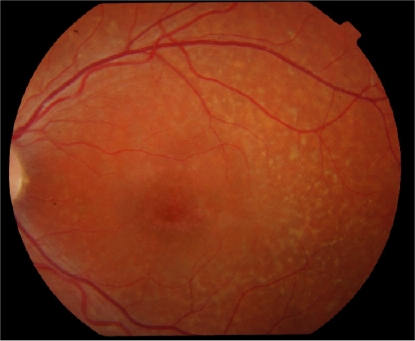
For only the second time, the FDA has approved a test in people of a treatment using embryonic stem cells -- this time for a rare disease that causes serious vision loss. This was covered on the front page of the Business Day section in NY times.

Researchers at the California-based Advanced Cell Technology explained that their experiment will focus on Stargardt disease, which affects only about 30,000 Americans. But the company hopes the same approach will work for similar and more common eye disorders like age-related macular degeneration, which affects millions.

The current study will involve injecting 50,000 to 200,000 cells known as retinal pigmented epithelial cells in the hopes that they will replace those ravaged by the disease.
Enhanced by Zemanta

Monday, August 30, 2010


Advanced Cell Technology, Inc., a biotechnology company applying cellular technology in the field of regenerative medicine, announced today that the U.S. Food and Drug Administration (FDA) has granted orphan drug designation for the company’s MA09-hRPE cells for use in the treatment of Stargardt’s Macular Dystrophy (SMD).

“We are pleased that the FDA has, for the first time, granted orphan drug status for the use of an embryonic stem cell derived therapy in treating an unmet medical need,” said Edmund Mickunas, Vice President Regulatory. “We believe that our terminally differentiated RPE cells represent a promising treatment for patients with SMD and expect to be in a position to accelerate clinical development and hopefully make RPE cellular therapy available to the majority of patients sooner.”

US orphan drug designation is granted to companies with products aimed at treatment of a rare disease or condition that affects fewer than 200,000 Americans. The National Institutes of Health (NIH) recently proposed broadening the definition of a human embryonic stem cell to include ACT’s “single blastomere technology platform” which was used to derive ACT’s MA09-hRPE cells. The Company believes that the SMD program should be eligible for federal funding once the change is published in the Federal Register.

Degenerative diseases of the retina are among the most common causes of untreatable blindness in the world, and as many as ten million people in the United States have photoreceptor degenerative disease. While most of these patients have Age-Related Macular Degeneration (AMD), a smaller number have Stargardt’s, an Orphan disease and to date an untreatable form of juvenile macular degeneration leading to blindness in a much younger group of patients than are affected by AMD. ACT’s treatment for eye disease uses stem cells to re-create a type of cell in the retina that supports the photoreceptors needed for vision. These cells, called retinal pigment epithelium (RPE), are often the first to die off in SMD and AMD, which in turn leads to loss of vision.

While there is currently no treatment for SMD, several years ago ACT and its collaborators discovered that human embryonic stem cells could be a source of RPE cells. Subsequent studies found that the cells could restore vision in animal models of macular degeneration. In a Royal College of Surgeons (RCS) rat model, implantation of RPE cells resulted in 100% improvement in visual performance over untreated controls, without any adverse effects. The cells survived for more than 220 days and sustained extensive photoreceptor rescue. Functional rescue was also achieved in the ‘Stargardt’s’ mouse with near-normal functional measurements recorded at more than 70 days.
Enhanced by Zemanta

Thursday, August 12, 2010

Ayala carefully prepares to put a contact lensImage via WikipediaThe journal Pediatrics, in association with the Food and Drug Administration (FDA), released the results of a 2-year study looking at emergency room visits for medical device-associated adverse events in children.

Of all the visits, about 23 percent were associated with contact lens wear. These events included abrasions and ulcers of the cornea and conjunctivitis. While these did not require hospitalization, many could have been prevented.

The most common risk factors for contact lens complications in this study were alteration of the prescribed wearing or replacement schedules and non-compliance with recommended contact lens wear and care regimens. It is well known that improper care, using solutions other than those prescribed, not replacing cases or lenses as prescribed, poor hygiene, buying lenses on the Internet without a valid prescription, and not seeing the eye doctor regularly, all lead to increased risk of complications.
Enhanced by Zemanta

Friday, July 09, 2010

FDA Approves Implantable Telescope To Help Patients With AMD


FDA has approved a first-of-its-kind technology to counter a leading cause of blindness in older adults -- a tiny telescope implanted inside the eye.
The Implantable Miniature Telescope aims to help in the end stages of incurable age-related macular degeneration, although the FDA warned Tuesday that patients need post-surgery rehabilitation to make it work.

Dr. Malvina Eydelman, FDA's ophthalmic devices chief, said the device can improve the quality of life for those who are 75 and older, have a certain degree of vision loss and who also need a cataract removed. In addition, the FDA took the highly unusual step of requiring that patients and their surgeons sign a detailed 'acceptance of risk agreement' before surgery, acknowledging potential side effects -- including corneal damage and worsened vision -- and the need for lots of testing to determine who's a candidate.

The benefits of the telescopic implants are numerous, such as:

1. Improving the central vision acuity of patients.

2. Can be used in combination with drugs to treat macular degeneration and photodynamic thepray. The use of anti-hypertensive and anti-angiogenic drugs to treat wet advanced macular degeneration, a condition in which ocular arteries leak inside the eye, include ranibizumab and bevabizumab which can cost upto $2,000 per treatment. Ideally, these prosthetic implants will be offered to patients who have undergone photodynamic therapy to destroy "leaky" blood vessels of the eye before this implant can be made in one eye.

3. It may be more cost effective to use these telescopic implants for the treatment of both dry and wet age related macular degeneration over time compared to the continual, protracted and expensive use of drugs. With time, the dosage and use of these drugs can be reduced once the damaged tissue is healed and the implant has been placed in one of the affected eyes.

"The telescope implant represents a new category of treatment for this severely visually impaired population," said Allen W. Hill, CEO of VisionCare.


Enhanced by Zemanta

Wednesday, June 03, 2009

ಸುರ್ಗೆರಿ ಫಾರ್ ರೆದಿಂಗ್ ಗ್ಲಸ್ಸೇಸ್

Pennsylvania's Times Leader reported that with the insertion of the Tecnis multifocal lens, patients with presbyopia, a visual condition that becomes apparent especially in middle age and in which loss of elasticity of the lens of the eye causes defective accommodation and inability to focus sharply for near vision, will regain the ability to see more clearly and not need to rely on reading glasses or bifocals again. Notably, 88 percent of those who received the Tecnis in both eyes reported never wearing glasses four to six months after surgery, and more than 90 percent never needed glasses for distance activities, such as driving, or near activities, such as reading, according to Frank Bucci, MD, who was one of 12 surgeons in the US to use the lens in trial cases with the Food and Drug Administration. The cost of the surgery is about $4,400.
Reblog this post [with Zemanta]

Twitter Delicious Facebook Digg Stumbleupon Favorites More

 
Design by Free WordPress Themes | Bloggerized by Lasantha - Premium Blogger Themes | Bluehost Review