3:04 PM
 Keshav Bhat


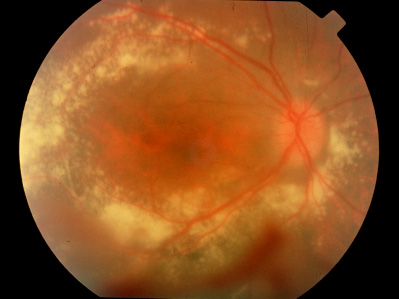
The CBS Evening News reported that there is good news for the more than 10 million Americans who suffer from some type of vision disorder. In an experimental gene therapy trial at the Children's Hospital of Philadelphia, researchers used DNA from a DNA bank to create a functioning gene that was missing in 12 patients who were legally blind. The gene was then injected into the eye with a thin needle, which created a missing protein inside the faulty retina, helping to restore vision.
The Los Angeles Times reported that the finding, published in the Lancet, suggests it may be possible to produce similar improvements in a much larger number of patients with retinitis pigmentosa and macular degeneration. The participants had Leber's congenital amaurosis, and were born with severely impaired vision, which typically deteriorates until patients "are totally blind."
The Wall Street Journal reports that although the treatment did not restore normal sight in any participants, there was some improvement in all of them. Six participants reported enough vision to no longer be considered legally blind, while four children achieved significant recovery of vision.
According to Katherine High, a gene therapy researcher at the University of Pennsylvania, all of the participants had mutations disabling a gene called RPE65 that produces a protein essential to vision, Bloomberg News reported. Study author Jean Bennett noted that patients improved on standard vision tests, such as reading eye charts, and their pupils had a much greater response when light was shined in their eyes after being treated.
The study showed that the youngest participant's treated eye became 10,000 times more sensitive to light, as measured by the pupil's ability to constrict, while the eyes of the adults became hundreds of times more sensitive, at best, thePhiladelphia Inquirer reported. And, although expectations for patients in their 20s were low, those patients "improved more than the researchers expected."
The authors noted that the visual recovery noted in the children confirms the hypothesis that efficacy will be improved if treatment is applied before retinal degeneration has progressed, HealthDay reported. While patients younger than 20 had larger visual field recoveries than older patients, the study also showed that pupillary response...improved in the injected eye of all 11 patients tested. BBC News, the UK's Telegraph, and AFP also covered the story.

![Reblog this post [with Zemanta]](https://lh3.googleusercontent.com/blogger_img_proxy/AEn0k_uVsH87s0IVNK4mpuca35qhvX_AnmiSrnWDfX6_OLaKbTWQXC26nJA9wgOwoq93MCM-HSD51_c8v-HEsTRR6AF6yM2IZbV6vmaJ_odaaTEHQIva7nNRrhCJ4tPIsyRGWkj5-nR0KoJCtdfw4Nohyx7M=s0-d)
![Reblog this post [with Zemanta]](https://lh3.googleusercontent.com/blogger_img_proxy/AEn0k_vk7dRiXkjV5YM5Eyo5DUc7bOD4aIpR6P6L-Rk560nvBC2pJ6JHR9-7deOO8mE_prg6_X91jfae-osHwSeX6clgeZKousjN0xE2G2rBz4W6peJpkE3fqOQFt3VHHpsfhz50BTw7CqtaqZKh_qXyrMDZ=s0-d)