Monday, November 01, 2010

Essilor announces new lens


Essilor of America, Inc. announced that it has launched the first personalized lenses available in the United States designed to accommodate the specific physiology of certain ethnic populations.

Essilor’s research and development analysis of more than 200,000 patients in the areas of optics, physiology and how people use their eyes and wear their frames revealed that five out of six wearers in Asian populations have different measurements from the average values for pantoscopic tilt, wrap angle and vertex distance. The company then used these data to develop patented technology that personalizes lenses for Chinese and Indian eyes and is now offering Varilux Physio Enhanced Azio, Essilor Azio Single Vision and Varilux Physio Enhanced India lenses as the first of its new ethnic lens products.
Enhanced by Zemanta

Wednesday, October 20, 2010

Researchers Using Lasers To Correct Presbyopia

Lasik has been the most discussed process for vision correction - and it certainly does wonders for the near sighted individual. Many middle-aged folks have not had many good options so far. Researchers are constantly improving on techniques to help this demographic.
In one technique, researchers used lasers to re-engineer the eyeball, either by cutting slits, into which tiny lenses can be inserted, or by altering the shape of its outer layer. Leading this field is Technolas Perfect Vision of Germany born out of a joint venture between Bausch & Lomb's Refractive Surgery unit and 20/10 Perfect Vision.
They have patented a process called INTRACOR a technique that provides flapless intrastromal correction using the TECHNOLAS® Femtosecond Workstation, to achieve reshaping of the cornea.


INTRACOR presbyopia procedure is based on a gentle, localized change in corneal curvature. The epithelium and Bowman’s membrane both remain fully intact.

Presbyopia correction with INTRACOR® lasts approximately 20 seconds. During the procedure, gas bubbles form in the cornea, and the patient's vision is blurred for 2 to 3 hours. When the bubbles dissolve, the cornea clears and the distance visual acuity returns. After that, the patient can immediately notice the change in near visual acuity. On the first day after sugery, most patients experience a gain in near visual acuity.
Enhanced by Zemanta

Tuesday, October 19, 2010

Macbuntu

My primary computer is a Macbook Pro and I have been a Mac fan for a lot longer. My office has many iMac's and my staff have come to love its stability and ease of use too.
At home, I have been dabbling in the operating system Ubuntu for a few years now.
I came upon a recent article in Lifehacker about turning your Ubuntu system into a Mac look alike.
The instructions were very simple: Just type four lines in a Terminal window, hitting Enter after each one:


Bam!
Here is my desktop


Awesome, No?

FDA approval for Ista Pharma’s Bromday eye drop

Cataract in Human EyeWikipedia
Food and Drug Administration
has approved Ista Pharmaceutical's drug Bromday (bromfenac ophthalmic solution) as a once-daily eye drop to treat inflammation and reduce pain in patients following cataract extraction. Shares of Ista Pharmaceuticals Inc. rallied on Monday after this announcement.
Ista already sells Xibrom [bromfenac ophthalmic], a twice-daily eye drop for postoperative inflammation and the reduction of ocular pain in patients who have undergone cataract surgery.
The company reported Xibrom net sales of $81.1 million in 2009. Once Bromday is established with ophthalmologists in the U.S., the company will discontinue Xibrom (bromfenac ophthalmic solution). Xibrom was the first twice-daily NSAID approved for the treatment of this specific problem. It is the revenue leader and one of the fastest growing products in the $335 million U.S. ocular inflammation market. Xibrom revenues in the first half of 2010 were $41 million. The company expects 2010 revenues for Xibrom and Bromday combined of $95–105 million.
Enhanced by Zemanta

Inhalants For Sexual Pleasure May Cause Eye Damage

In the Vital Signs column in the New York Times, Roni Caryn Robin reports, "Users call them poppers: a class of chemicals called alkyl nitrites that can be inhaled for a quick high, or to enhance sexual pleasure." Now doctors in France are warning that they can also cause eye damage and impaired vision.

In a letter to The New England Journal of Medicine, the author Catherine Vignal-Clermont, M.D.

Fondation Ophtalmologique Adolphe de Rothschild, Paris, France describe four cases over three months in which patients' vision was affected after they used poppers at parties. Exactly how poppers can affect vision is unknown, but it is likely due to a flood of an alkyl nitrite named isopropyl nitrite, which releases nitric oxide.


Consumers and eye care providers should be aware of the possible retinal toxicity of poppers, especially if there is vision loss in both eyes, the researchers conclude.

Enhanced by Zemanta

Tuesday, October 12, 2010

Is Health Care Recesion Proof?


Americans are abandoning their prescriptions at pharmacies rather than pay higher prices for them, according to a recent analysis of 80 million pharmacy claims conducted by Wolters Kluwer Pharma Solutions. This was reported in the Wall Street Journal.

Wen I started my practice as a 'cold start' 2 years ago (smack bang at the start of this downhill trend!) many friends and relatives assured me that health care is pretty much recession proof. The new data shows that many folks are making some very tough decisions.

The data showed that this phenomenon increased by 55% during the second quarter of 2010, compared to 2006 statistics. Conventional wisdom has indicated that prescription medicines were not susceptible to economic downturns since sick people must take medication in order recover. This new evidence, however, suggests that people are deciding whether to pick up prescriptions based on price.

The average co-pays for brand-name drugs such as cholesterol fighter Lipitor rose to $28 a prescription this year, an 87% jump from 2000, according to the Kaiser Family Foundation. Some co-pays can be as high as $100!

The article quotes Anne Peters, director of the University of Southern California's Clinical Diabetes Program. She notes that patients lost control of their blood-sugar levels after either abandoning Lantus insulin prescriptions or spacing out its use because of the expense, she said.

In response, Dr. Peters is prescribing a less-expensive insulin sold at Wal-Mart Stores Inc. A 10ml vial of Lantus costs $111.88 on drugstore.com, while Wal-Mart charges $24.88 for the same size vial of Humulin ReliOn insulin.

Now, this also brings into question the role Walmart plays in the healthcare field. A very common gripe of private practices like mine is the dispensing of contact lenses at Walmart. The big box retail is able to sell Acuvue2 at a price that is practically unmatched by anyone else. Frequently I prescribe an alternative based on examination findings. Yet, the patient calls back to request I write for Acuvue2 as it is far less expensive! I suppose this is another story for another day!

Enhanced by Zemanta

Americans Undergoing Treatment For Retinal Conditions Doubled Over 10 Years.

The number of older Americans getting help for fading eyesight almost tripled by 2007 from a decade earlier as the nation aged," according to a study published in the October issue of the Archives of Ophthalmology.

Medicare recipients in 2007 received 812,413 injections into the eye with drugs like Roche’s Lucentis for macular degeneration or Avastin, up from fewer than 5,000 a year from 1997 to 2001, a study in the Archives of Ophthalmology found. Use of rival drugs, laser treatments and photodynamic therapy, such as QLT Inc.’s Visudyne, plunged, according to Dr Ramulu and colleagues from Johns Hopkins University’s Wilmer Eye Institute.

Approximately 1.5 percent of those older than 40, have age-related macular degeneration, according to the National Eye Institute. The number is expected to reach 3 million by 2020 as the population ages, the agency says.


Enhanced by Zemanta

Thursday, October 07, 2010

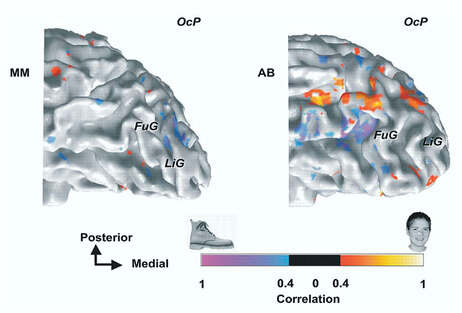
Blind People Use Visual Cortex To Heighten Senses Of Touch, Hearing.

A fMRI scan showing regions of activation in o...Image via Wikipedia

Blind people use the visual part of their brain to heighten their senses of touch and hearing, according to a study published in the Oct. 6 issue of the journal Neuron.

In the study, researchers used functional MRI to observe brain activity in 12 people who were blind from birth and 12 sighted people as they performed a set of tasks involving hearing and feeling. The investigators found that the visual cortex in the blind takes on these functions and processes sound and tactile information, which it doesn't do in the sighted.

"The neural cells and fibers are still there and still functioning, processing spatial attributes of stimuli, driven not by sight but by hearing and touch", the study's lead author Josef P. Rauschecker, a professor in the department of physiology and biophysics at Georgetown University Medical Center, explained.

Enhanced by Zemanta

Wednesday, September 29, 2010

Science News I like!

Turmeric (Curcuma longa)Image via WikipediaScientists at the University of Leicester, funded by Hope Against Cancer, a Leciestershire based charity are pioneering the use of a common curry cooking ingredient to target cancer cells.

Dr Karen Brown, a Reader at the University, is the principal investigator of this new research, which is also being led by Dr Lynne Howells, of the and Biomarkers Group at the University.

The aim is use tissue from the colorectal tumours to effectively target chemo-resistant cells using curcumin, an extract of the commonly used root turmeric.

They will test their hypothesis using tissue from tumours extracted from patients undergoing surgery. Previous laboratory research has shown that curcumin, has not only improved the effectiveness of chemotherapy but has also reduced the number of chemo-resistant cells which has implications in preventing the disease returning.

ABOUT COLORECTAL CANCER

  • Accounts for over 600,000 deaths a year
  • The third leading cause of cancer deaths in the western world
  • The risk of developing increases with age
  • Studies show that a diet high in red meat and low in fresh fruit, vegetables, poultry and fish increases the risk of colorectal cancer
ABOUT TURMERIC:
  • Part of the ginger family
  • Native to south Asia
  • Orange/yellow powder is a spice for curries
  • Curcumin has an earthy, peppery flavour
  • It has been used for medicinal purposes for centuries
  • Its potential use in Alzheimer's, arthritis and other disorders is also being investigated around the world


Enhanced by Zemanta

Monday, September 27, 2010

Thousands Of Baltimore Students May Lack Vision Care


The Baltimore Sun reports that in Maryland, thousands of Baltimore students may have eyesight problems that go undetected and uncorrected because of inadequate funding in the city's school-based health system -- a problem that leaves many of them at a disadvantage in the classroom, according to a report released Monday by the Abell Foundation.

The report found that many students are falling through the cracks of the city's school-based vision-screening program, a problem exacerbated by the school system's truancy challenges and its urban population. In particular, the report focused its criticism on the number of vision screeners at the Health Department. Nine screeners are responsible for students at 140 city schools, in addition to 1,600 private-school students, the study found.

We are fortunate that Charlotte Mecklenburg School Health has a very good vision screening program. I was fortunate to participate in the training of health service staff and nurses in screening for visual disorders.

Enhanced by Zemanta

Thursday, September 23, 2010

Video Games May Help Treat Lazy Eye


Scientific studies on video games have mainly focused on the harmful effects of playing the fast-moving action games on computer or TV screens. But new research indicates that video game therapy can improve the vision of adults with lazy eye also known as Amblyopia.

Amblyopia is a brain disorder in which the vision in one eye does not develop properly and is the most frequent cause of permanent visual impairment in childhood, affecting two to three of every 100 children, according to the National Eye Institute. Amblyopia is also the most common cause of one-eye visual impairment among young adults or people in middle age.

Although lazy eye in children can be treated by putting a patch over the “good eye” to force the brain to use the “lazy” one, few options have been available for adults with the disorder. Conventional wisdom has held that unless the disorder is corrected in childhood, “damage was thought to be irreversible".

Sept. 22, 2010 -- Most scientific studies on video games have focused on the harmful effects of playing the fast-moving action games on computer or TV screens. But new research indicates that video game therapy can improve the vision of adults with lazy eye.

A study published in the Sept. 21 issue of PLoS Biology shows that people with lazy eye, or amblyopia, had marked improvement in visual acuity and 3-D depth perception after spending 40 hours playing video games.

Study researcher Roger Li, PhD, of the School of Optometry and the Helen Wills Neuroscience Institute at the University of California, Berkeley, says the study is the first to show that playing video games can improve blurred vision in adults with lazy eye.

Researchers used an action video game that required subjects to shoot at targets, or a non-action game where users construct things on screen. Twenty subjects participated, between the ages of 20 and 60.

In one experiment, 10 patients played the action video game for 40 hours, two hours at a time, over the course of a month. In another, three people played the non-action video game for the same amount of time, while wearing a patch over their good eyes.

The researchers say both experiments produced a 30% increase in visual acuity, or an average of 1.5 lines on the standard letter charges used by optometrists.

Enhanced by Zemanta

Wednesday, September 22, 2010


Three million to nine million people in the United States have vision problems that keep them from enjoying such 3-D movies as Avatar and Toy Story 3, estimates the American Optometric Association (AOA).
What's more, "as many as 56 percent of people between 18 and 38 years of age suffer from symptoms related to depth-perception problems." A poll conducted by the AOA found that headaches, blurred vision, and dizziness are the most common side effects from 3-D movies for people who have binocular vision difficulties.

Today's films, like those of yore, are made by recording and projecting a separate pair of image-tracks for each eye. These are slightly offset from each other, giving what's called a binocular disparity cue, which in turn produces an illusion of depth.

Vision researchers have spent many years studying the discomfort associated with watching stereoscopic movies. Similar problems plague flight simulators, head-mounted virtual-reality displays, and many other applications of 3-D technology. There's even a standard means of assessing 3-D fatigue in the lab: The "simulator sickness questionnaire" rates subjects on their experience of 16 common symptoms—including fatigue, headache, eyestrain, nausea, blurred vision, sweating, and increased salivation.
Enhanced by Zemanta

Tuesday, September 21, 2010

Fundus photo showing focal laser surgery for d...Image via WikipediaMedWire reported that, according to a study published in the journal Diabetes, high serum levels of prolactin are associated with a decreased risk for diabetic retinopathy.
After working with rats and also measuring serum prolactin in 40 nondiabetic and 181 diabetic men with various degrees of retinopathy, researchers led by Carmen Clapp of the Cellular and Molecular Biology institute at the Institute of Neurobiology found that mean prolactin levels were higher in diabetic versus nondiabetic individuals (34.1 vs. 16.3 ng/ml), but lower in diabetic patients with proliferative retinopathy than in those without this complication (26.7 vs. 32.8 ng/ml). Notably, the results were the same, regardless of whether patients had type 1 or type 2 diabetes.
The researchers conclude that prolactin is an important systemic inhibitor of diabetes induced retinal hypervasopermeability after its intra ocular conversion into vasoinhibins.

Enhanced by Zemanta

Monday, September 13, 2010

Australian Researchers Identify Several New Genes Causing Eye Disease


Australia's Herald Sun reports, Australian scientists have identified several new genes that cause eye disease, in further steps towards a test that could determine a person's lifetime 'risk of blindness.'

Investigators led by Stuart MacGregor at the Queensland Institute of Medical Research assessed data from more than a thousand sets of twins, looking for genes that drive a range of vision-related problems from mild to severe.

They found not only a gene influencing cornea thickness, but also discovered a new gene for myopia...new genes affecting glaucoma risk, and a gene that causes optic nerve hypoplasia -- one of the leading causes of blindness in children.
Enhanced by Zemanta

Blindness May Be As Much A Function Of The Brain As Of The Eye


NPR Morning Edition program reports that people who have been blind since childhood may not be able to see so well after sight-restoring surgery as adults. That is because their brains have rewired themselves, so to speak, to accommodate the vision loss.

In the case described by NPR, as a child, one man's "visual cells...devoted to fine detail eventually deteriorated." His blindness in early childhood set off a chain reaction as other parts of [his] brain that also depended on visual information suddenly weren't getting it. As a result, he lost both the ability to recognize faces and to tell different kinds of objects apart.

This case was first studied by Ione Fine, an assistant professor of psychology at the University of Washington. The gentleman who was studied Mike May, had been able to see, once upon a time. She wondered, now that he had a good eye, why couldn't his brain pick up where it left off? That's the subject of a paper published earlier this year in the journal Neuron.
Enhanced by Zemanta

Saturday, September 11, 2010

Venn diagram illustrating the relation between...Image via WikipediaABC World News reported, Despite all of our efforts to get healthy in America...most of us are not eating as many fruits and vegetables as recommended. Over the past decade, the same number of us eat vegetables and even fewer of us are eating enough fruit.

The AP reports that most Americans still don't eat vegetables often enough, and fruit consumption is actually dropping a little, according to a new government report released Thursday. The CDC found that last year, about one-third of US adults consumed fruit or fruit juice at least twice a day. That's down slightly from more than 34 percent in 2000. Only about 26 percent ate vegetables three or more times a day, the same as in 2000.

Women Much More Likely Than Men To Eat Recommended Servings. The Orlando Sentinel Vital Signs blog reported that the numbers haven't even increased in ten years, despite efforts from the federal government like 'five-a-day,' which suggests eating a colorful variety of fruits and vegetables. Also, women are much more likely than men to eat the recommended servings.
Enhanced by Zemanta

PHASE 3 STUDY OF CAN-FITE'S DRY EYE DRUG.

Can-Fite BioPharma Ltd. has opened an Investigational New Drug application (IND) with the FDA for a Phase 3 study of its lead drug, CF101, in patients with moderate to severe dry eye syndrome.
Dry eye syndrome is a chronic lack of sufficient lubrication and moisture on the surface of the eye. Its consequences range from subtle but constant irritation to ocular inflammation of the anterior (front) tissues of the eye. Dry eyes also are described by the medical term, keratitis sicca, which generally means decreased quality or quantity of tears
CF101 was found to be safe and well tolerated in an earlier Phase 2 study, in which the drug was taken orally as a monotherapy for 12 weeks.
According to Can-Fite, the randomized, double-masked, Phase 3 trial, which will enroll approximately 240 patients at multiple centers, will compare 2 doses of CF101 to placebo. The patients will be treated for 24 weeks and the main outcome assessments are improvement of corneal fluorescein staining, tear production and dry eye symptom score.
The National Women's Health Resource Center has named the top 100 dry eye hot spots in the United States based on information compiled from the National Oceanic and Atmospheric Administration's Climatic Data Center and the Environmental Protection Agency.
Factors used in the selection process included temperatures, humidity, wind, altitude, pollutants and ocular allergens.
The top 20 U.S. cities named as dry eye hot spots are:
1. Las Vegas, Nev.
2. Lubbock, Texas*
2. El Paso, Texas*
4. Midland/Odessa, Texas
5. Dallas/Fort Worth, Texas
6. Atlanta, Ga.
7. Salt Lake City, Utah
8. Phoenix, Ariz.
9. Amarillo, Texas
10. Honolulu, Hawaii
11. Oklahoma City, Okla.
12. Albuquerque, N.M.
13. Tucson, Ariz.
14. Norfolk, Va.
15. Newark, N.J.
16. Boston, Mass.
17. Denver, Colo.
18. Pittsburgh, Pa.
19. Bakersfield, Calif.*
19. Wichita, Kan.*
*Cities were tied for these spots.

Thursday, September 09, 2010

Retinal Injuries from a Handheld Laser Pointer

According to a case study published in the Sept. 9 issue of the New England Journal of Medicine, a 15-year-old Swiss boy damaged his eyes while playing with a laser pointer he'd bought over the Internet, say doctors who warn that dangerously high-powered versions are easily available online.

The pointer used by the teen was "30 times more powerful than the FDA limit." After playing with it in front of a mirror to create a light show...he accidentally zapped his eyes with its green light several times.

The majority of the laser pointers used in the U.S. have either Class 2 lasers with a maximum power output of less than 1 mW or Class 3R diode lasers in the 630-680 nm wavelength (red), with a maximum power output of between 1 and 5 mW. All laser pointers should have a small sticker on them with either a yellow "Caution" or black and red "Danger" insignia, the laser classification (2 or 3R), the maximum output power (in milliwatts mW) and the wavelength. It is prudent not to purchase or use unlabeled laser pointers.

Retinal injuries from lasers can result from ablative, thermal, or photochemical mechanisms depending on power, wavelength, exposure time, and size of pupil.

Laser pointers are effective tools when used properly. The following considerations should be observed when using laser pointers:

  • Never look directly into the laser beam.
  • Never point a laser beam at a person.
  • Do not aim the laser at reflective surfaces.
  • Never view a laser pointer using an optical instrument, such as binocular or a microscope.
  • Do not allow children to use laser pointers unless under the supervision of an adult.
  • Use only laser pointers meeting the following criteria
    • Labeled with FDA certification stating "DANGER: Laser Radiation" for Class 3R lasers or "CAUTION: Laser Radiation" for Class 2 pointers.
    • Classified as Class 2 or 3R according to the label. Do not use Class 3b or 4 products.
    • Operates at a wavelength between 630 nm and 680 nm.
    • Has a maximum output less than 5 mW, the lower the better.

Enhanced by Zemanta

Wednesday, September 01, 2010

Too Few Infants Get Comprehensive Eye Assessments


One in 10 infants in the U.S. have undetected vision problems, ranging from crossed eyes to cancer. While most parents know eye and vision problems can be detected in children before they're a year old, only 19 percent of those who participated in the American Optometric Association's (AOA) annual Eye-Q® survey report taking their infant for a comprehensive eye assessment.

Read more here
Enhanced by Zemanta

AOA Pushes Children's Vision Benefit to HHS Secretary

Although the new national health care reform law - most commonly referred to as the Affordable Care Act - was approved by Congress and signed into law by President Obama in late March, the Washington, D.C. battles over health care reform are far from over.

Right now, Federal agencies - led by the U.S. Department of Health and Human Services (HHS), are going through the legislation's more than 2000 pages and are writing rules on how it will be implemented - mostly between now and 2014.

And in the first of many health overhaul implementation battles that will directly impact optometry, concerned ODs and students are urging their elected national leaders to join the fight and help AOA fully define the new children's vision benefit.

Through its all-out advocacy efforts in 2009 and 2010 focusing on Capitol Hill, the AOA helped make children's vision a top health care priority at the national level. In fact, an AOA-backed provision included in the new law specifically designates children's vision as an "essential health benefit."

This now means that in 2014 all health plans participating within the new state-based health insurance exchanges will be required to provide a children's vision benefit. However, how "children's vision" is ultimately defined has yet to be determined by HHS officials, though it will make an enormous difference to millions of American families.

That's why AOA has made it a priority to ensure that top HHS officials fully understand the issue and the stakes for America's kids. As evidenced in a special video message to the AOA from HHS Secretary Kathleen Sebelius (http://tinyurl.com/25qumop ), these efforts are making a difference.

In the coming weeks and months, however, it will be important that concerned Senators and House members who support comprehensive eye exams weigh-in with Secretary Sebelius and help make certain that the children's vision benefit is not hijacked or diminished in any way during what could be a very lengthy and confusing regulatory process.

Enhanced by Zemanta

Twitter Delicious Facebook Digg Stumbleupon Favorites More

 
Design by Free WordPress Themes | Bloggerized by Lasantha - Premium Blogger Themes | Bluehost Review