Friday, October 02, 2009

Vision impacts life success


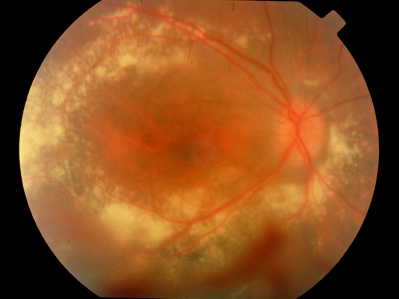
MedPage Today reported that, according to a study published online in Ophthalmology, patients with age-related macular degeneration (AMD) have a 50 percent increased risk of coronary heart disease.


Researchers from the Singapore National Eye Center conducted a population-based cohort study of 1,786 patients who didn't have heart disease and 2,228 patients without stroke at baseline. Patients were between the ages of 69 and 97. The investigators found that those with early macular degeneration had a higher cumulative incidence of heart disease than those without (25.8 percent versus 18.9 percent).

Notably, there was a significantly higher cumulative incidence of heart disease for those with specific signs of early macular degeneration -- soft drusen, hyperpigmentation, and RPE depigmentation

Reblog this post [with Zemanta]

Thursday, October 01, 2009

Handheld device detects blindness in infants


A new handheld device, developed in part by biomedical engineers at Duke University Medical Center, uses spectral domain optical coherence tomography to allow doctors to look for retinopathy of prematurity in infants, a condition that could lead to blindness.

The new device developed by Bioptigen, which creates a 3D image of the back of the eye, can even be taken to infants in the neonatal ICU, and can be used without ever touching an infant's eye. Researchers now say that it's time to determine what role the imaging could play in treatment decisions.

Duke Eye Center ophthalmologist Cynthia Toth compares the process to inspecting fish from the side of an aquarium instead of through an ocean's murky surface.

Reblog this post [with Zemanta]

Tuesday, September 29, 2009

mom forgoes treatment to save daughter from blindness

Monique Zimmerman-Stein has been nearly blind for the last two years from Stickler syndrome, a rare genetic disorder. She recently decided to forego her own treatment to save funds to treat her two daughters, who also suffer from the condition, reports Lane DeGregory of the St. Petersburg Times.

The family is covered under husband Gary's Blue Cross/Blue Shield plan, but that coverage only pays for 80 percent of medical expenses.


Reblog this post [with Zemanta]

In the New York Times Really? column, Anahad O'Connor explores the claim that blindness may heighten other senses. "In one series of studies, neuroscientists at McGill University tested blind and sighted subjects for pitch perception and their ability to locate sounds." The researchers found that "those who were born blind did best," while "those who became blind as small children were slightly behind, and those who lost their vision after age 10 did no better than the sighted subjects," indicating that a young brain could be rewired so that visual-processing areas were used for other purposes.

Meanwhile, brain-imaging studies indicated that blind subjects who were best able to locate sound were engaging both the auditory and the visual areas of the cortex.
Here is a nice summary of the visual system from Mcgill's guided tour of the brain

Reblog this post [with Zemanta]

Monday, September 28, 2009

Intravitreal injection of triamcinolone may improve vision in retinal vein occlusion

Interior of posterior half of bulb of left eye...Image via Wikipedia

Medscape reported that, according to a study published in the Sept. issue of the Archives of Ophthalmology, intravitreal injection of the corticosteroid triamcinolone may improve vision in retinal vein occlusion.

Researchers from the Standard Care vs. Corticosteroid for Retinal Vein Occlusion (SCORE) Study Research Group compared "the efficacy and safety of one-mg and four-mg doses of preservative-free intravitreal triamcinolone vs. observation for eyes with vision loss associated with macular edema secondary to perfused" central retinal vein occlusion "in 271 participants." They found that the the one-mg group had five-fold greater odds of achieving the primary outcome, as "did the four-mg group," with both the "one-mg and four-mg groups" being "not significantly different from each other."

Reblog this post [with Zemanta]

Researchers advancing new ways of helping blind people see


On its front page, the New York Times reported that 38 patients from the US, Europe, and Mexico are beginning an intensive three-year research project involving electrodes surgically implanted in their eyes, a camera on the bridge of their noses, and a video processor strapped to their waists, in a burst of recent research aimed at one of science's most-sought-after holy grails: making the blind see.


Researchers involved in the project, the artificial retina, say they have plans to develop the technology to allow people to read, write and recognize faces. Meanwhile, other approaches to treating blindness include gene therapy, which has produced improved vision in people who are blind from one rare congenital disease. Stem cell research is considered promising, although far from producing results, and other studies involve a light-responding protein and retinal transplants.

Reblog this post [with Zemanta]

Friday, September 25, 2009

Drug-dispensing contact lens may treat eye conditions

Researchers have developed contact lenses with a sustained release of medication to treat glaucoma and other conditions.

Daniel Kohane, MD, PhD, director of the Laboratory for Biomaterials and Drug Delivery at Children's Hospital Boston, collaborator Joseph Ciolino, MD, of the Massachusetts Eye and Ear Infirmary, and colleagues at the Department of Chemical Engineering at the Massachusetts Institute of Technology (MIT) described their prototype lens in the July 2009 issue of Investigative Ophthalmology and Visual Science.

The researchers created a two-layer CL with an inner drug-bearing biodegradable polymer film known as PLGA. Both PLGA and pHEMA—used for the coating—have been well studied and are already FDA-approved for ocular use.

In laboratory testing, the prototype lenses dispensed ciprofloxacin for 30 days in amounts sufficient to kill pathogens. Researchers see application for conditions including glaucoma and dry eye, which require frequent daily eye drops. The technology won in the life sciences track in MIT's 100K Entrepreneurship Competition.

Thursday, September 24, 2009

Information System for Blind and Visually Impaired

The artificial intelligence group at Freie Universität Berlin, under the direction of the computer science professor Raúl Rojas, has developed a new type of information system for blind and visually impaired individuals.

“InformA” is a small computer that is connected wirelessly to the Internet. The device is operated like a radio. The user can choose between different information channels. By pressing a button, the time or the weather will be announced, but there are also current newspapers available as audio files...

via Google Blogoscoped

Tuesday, September 22, 2009

Smoking Bans Reduce Heart Attacks


Community smoking bans have an immediate and dramatic effect on reducing heart attacks, according to two new analyses of laws in the USA, Canada, and Europe. Researchers in both studies found that heart attack rates fall 17 percent within a year after smoking bans take effect, as reported in the USA Today.


After three years, the analyses indicated that the rate of heart attacks had decreased about 26 percent, the Wall Street Journal reports. The findings are based on analyses of studies that involved a total of approximately 24 million people. The researchers cautioned against basing hard conclusions on their findings, however, because of statistical flaws in their reports from aggregating data from studies with various designs and goals.

Exactly what can breathing in the smoke from someone else's cigarette do to you? It can:

Make the blood sticky and more prone to clotting
Stiffen the arteries
Disrupt crucial functions of the arteries
Decrease good HDL cholesterol
Stimulate inflammation
Make heart attacks worse
Increase damage from free radicals
Increase risk of heart rhythm problems
Increase insulin resistance

Quit smoking without gaining weight

Reblog this post [with Zemanta]

Monday, September 21, 2009


Merck amp; Co., Inc. has launched SAFLUTAN® (tafluprost) in the United Kingdom and Spain, and additional launches in other countries are expected over the next several months, pending regulatory approvals, the Company said today.

SAFLUTAN is a preservative free, synthetic analogue of the prostaglandin F2α for the reduction of elevated intraocular pressure (IOP) in appropriate patients with primary open-angle glaucoma and ocular hypertension. SAFLUTAN is in Phase III in the U.S.

Merck amp; Co., Inc. which operates in many countries as Merck Sharp amp; Dohme or MSD, and Santen Pharmaceutical Co., Ltd. announced a worldwide licensing agreement for tafluprost. Under the terms of the agreement, Merck agreed to pay an undisclosed fee as well as milestones and royalty payments based on future sales of tafluprost (both preserved and preservative-free formulations) in exchange for exclusive commercial rights to tafluprost in western Europe (excluding Germany), North America, South America and Africa. Santen will retain commercial rights to tafluprost in most countries in eastern Europe, northern Europe and in countries in the Asia Pacific area, including Japan. Merck will provide promotion support to Santen in Germany and Poland. If tafluprost is approved in the U.S., Santen will have the option to co-promote it there. SAFLUTAN marketed by MSD, and TAFLOTAN®, marketed by Santen in respective territories, is the only preservative-free prostaglandin currently available for patients with glaucoma.

Reblog this post [with Zemanta]

ultrasound eyebrow lift


Food and Drug Administration has cleared a new ultrasound eyebrow lift device, called the Ulthera System, to be marketed to dermatologists and plastic surgeons.


Ulthera claimed that the "noninvasive device...uses ultrasound imaging to target ultrasound energy that enables significant lifting of the skin. The press release went on to say that focused ultrasound energy triggers the body's natural healing response, resulting in new and improved collagen support and gradual firming, tightening, and actual lifting of skin tissue over time, with clinical studies indicating no serious adverse events and no recuperation time.

Reblog this post [with Zemanta]

Wednesday, September 09, 2009

September is Home Eye Safety Awareness Month

A sailor using welding gogglesImage via Wikipedia

One in five at-home eye injuries are due to home repair or power tools according to results from the “Sixth Annual Eye Injury Snapshot” by the American Society of Ocular Trauma (ASOT).

Every year, there are more than 2.5 million eye injuries; yet, the use of protective eyewear could have prevented 90% of these injuries. When starting any project, whether it is cleaning surfaces with chemicals, working on the car or doing yard work, PBA asks everyone to wear eyewear approved by the American National Standards Institute. The eyewear should have the “Z-87” logo stamped on the frames and can be purchased at hardware stores and home building centers.

PBA offers these tips on how to protect children’s eyes at home:

Teach children not to run around with forks, knives, combs, or toothbrushes.

Keep detergents, cleaning supplies, nail polish remover, mouthwash, and makeup in locked cabinets or out of reach.

Set a good example by wearing eye protection when using ammonia-based cleaning supplies or while working on projects.

Do not allow young children to use combs, brushes, or hairspray unless you watch or help them.

Prompt others who enter the work area to wear eye protection.

If you wear prescription glasses, many safety glasses or goggles will fit over your regular glasses. Ask your doctor what he or she recommends.

Reblog this post [with Zemanta]

Tuesday, September 08, 2009


The Philadelphia Inquirer reports that two months ago, surgeons at the Wills Eye Institute implanted a small array of electrodes in the back of Michael Adler's left eye. Now, in the last few weeks -- with the aid of a small video camera in his sunglasses that transmits images to his retinal implant -- he has begun to gain some limited vision.

To date, surgeons have implanted the devices in the retinas of 32 people around the world. All have a severe form of retinitis pigmentosa, an inherited disease that causes retinal degeneration. The retinal implant bypasses damaged cells in the eye, transmitting signals to the same part of the brain that registers images in people with normal vision. While the resulting black-and-white images are very low-resolution, consisting of just 60 pixels, they do allow Adler to see the outlines of doors and sidewalks, and he can pick out plates on the dinner table

Reblog this post [with Zemanta]

Wednesday, September 02, 2009


According to a study in Wednesday's Journal of the American Medical Association, the antibiotic Zithromax [azithromycin], which is widely used in Africa to treat the eyesight-robbing infection trachoma, seems to help prevent Ethiopian children from dying of other diseases.

For the study, researchers from the Carter Center in Atlanta compared villages where children received the antibiotic Zithromax to villages where treatment was delayed a year. The antibiotic cut the death rate in half, and the researchers speculate it helped prevent deaths from pneumonia, diarrhea, and malaria, the biggest killers of Ethiopian children.

The AP notes that trachoma is caused by bacteria that spreads to the eyes from fingers, clothing or, some researchers think, from flies. Over the years, blindness develops through repeated infections and scarring.

Reblog this post [with Zemanta]

Tuesday, September 01, 2009

Judge excludes testimony of expert witness in contact-lens solution lawsuits

Lens cover for storing contact lens.Image via Wikipedia

US District Judge David C. Norton has thrown out testimony from an expert witness in a combined series of lawsuits against Bausch amp; Lomb, Inc. over ReNu with Moisture Loc, a contact-lens solution the company recalled three years ago because its use was linked to fusarium keratitis, a fungal eye infection that can lead to blindness.

In his Aug. 28 ruling, Norton refused the plaintiffs' bid to admit into evidence testimony by Elisabeth J. Cohen, MD, of the Jefferson Medical College and the Wills Eye Hospital. Norton said that Dr. Cohen's theory, in the way she presented it before the court, "is built on an unsupported hypothesis, and is thus fundamentally flawed and must be excluded."

The AP reports that Norton "said there's no reliable scientific basis for arguing that MoistureLoc caused another 1,024 lens wearers across the" US "to contract assorted bacterial, viral, and parasitic infections." The judge ruled that "attorneys relying on the expert opinion of" Dr. Cohen "did not submit any peer-reviewed studies, articles, or case reports concluding that there is a causal relationship between MoistureLoc and non-Fusarium infections."

Reblog this post [with Zemanta]

Thursday, August 27, 2009

News my parents would never have imagined!

Scientists have produced monkeys with genetic material from two mothers, an advance that could help women with some inherited diseases have healthy children but that would raise a host of safety, legal, ethical and social questions if attempted in people

Researchers at Oregon Health amp; Science University developed a way to replace most of the genes in the eggs of one rhesus macaque monkey with genes from another monkey. They then fertilized the eggs with sperm, transferred the resulting embryos into animals' wombs and produced four apparently healthy offspring.

According to Bloomberg News, "defective mitochondria are passed only from mother to child, not from the father." Data indicate that nearly one in 4,000 births produce babies with defective mitochondria. At present, there is a technique that allows doctors to assess the egg cells of women with mitochondrial diseases and pick the healthiest ones to use with in vitro fertilization procedures. Still, some women do not have any "adequate egg cells," a fact that inspired the Oregon team to devise a way to "replace defective DNA in the mitochondria


Reblog this post [with Zemanta]

Tuesday, August 25, 2009

Fashion eyeglasses for children


Nebraska's Journal Star reported that eyeglasses are no longer the fashion don't for kids they once were, as wearers and manufacturers have realized they can be another accessory used to make a style statement.imatthews.com, Fashion eyeglasses for children, Aug 2009


You should read the whole article.

Monday, August 17, 2009

Gene Therapy Creates a New Fovea


Gene therapy for an inherited form of blindness shows promise, a U.S. study shows.

According to a study published in the Aug. online edition of Human Gene Therapy and in a letter to the editor in the Aug. 13 issue of the New England Journal of Medicine, experimental gene therapy appeared to improve vision in three patients with Leber congenital amaurosis. In this condition an abnormal protein in sufferers' photoreceptors severely impairs their sensitivity to light. "It's like wearing several pairs of sunglasses in a dark room," says Artur Cideciyan, a researcher at the University of Pennsylvania in Philadelphia, who oversaw the trial

For the study, researchers from the University of Pennsylvania injected a gene encoding a functional copy of a light-sensitivity protein into a small part of one eye of three patients, all in their twenties and blind since birth. Three months after treatment, all three patients showed substantial improvements in their ability to detect light. Notably, one year after treatment, one patient discovered that she could read an illuminated clock in the family car for the first time in her life.

The authors suggested that the brain can adapt to new sensory capacity, even in people who have been blind since birth

Reblog this post [with Zemanta]

Monday, August 10, 2009

Alzheimer's Patients have difficulty perceiving certain kinds of visual contrast

Memory loss in Alzheimer's disease conceals dramatic changes to vision which may make people seem less mentally competent than they actually are.

Researchers are now testing whether they could improve the lives of people with Alzheimer's by helping them see better, using low-tech interventions such as colored dinner plates, oversize change purses, and special bingo cards. The scientists believe that small changes, such as making sure patients can see a light switch or the edge of a stair, could have important consequences for their independence and quality of life.

Researchers from Dr Alice Cronin-Golomb's lab at Boston University have discovered that Alzheimer's patients have difficulty picking up on certain kinds of visual contrast. Unfortunately, the vision loss does not show up on a typical eye exam. So the problem may be blamed on memory, when it really is eyesight. A new rule of thumb may be that if you want a person with Alzheimer's to be able to see something, use bold contrasting colors.

One of the BU group’s collaborators, Grover C. Gilmore, dean of the Mandel School of Applied Social Sciences at Case Western Reserve University, has found that healthy adults were able to identify letters faster than Alzheimer’s patients. Normally, such a delay might be chalked up to memory problems. But when he increased the visual contrast, he found that the difference between the two groups disappeared.


Reblog this post [with Zemanta]

Thursday, August 06, 2009

The First Practice Academy

I just returned from a 2 day workshop called the The First Practice Academy.
This was a workshop held in Atlanta, GA. The sponsors were Ciba Vision and Essilor of America.
The entire event was aimed at a new business owner. I was one among over a 100 young doctors of optometry eager to listen to leaders in the industry. These leaders are individuals who started small themselves and grew into multi location, multi million dollar practices.
It was an amazing event - very inspiring and filled with great insights. I can't think of any other profession where this takes place. I have always been convinced that optometry is a very generous profession and this only went to further cement that opinion.
The speakers were Laurie L. Sorrenson, Amir Khoshnevis, Kelly Kerksick, Carole Burns, Mark Wright.

I want to thank the main sponsors for giving me an opportunity to be there...


Reblog this post [with Zemanta]

Twitter Delicious Facebook Digg Stumbleupon Favorites More

 
Design by Free WordPress Themes | Bloggerized by Lasantha - Premium Blogger Themes | Bluehost Review