Tuesday, September 22, 2009

Smoking Bans Reduce Heart Attacks


Community smoking bans have an immediate and dramatic effect on reducing heart attacks, according to two new analyses of laws in the USA, Canada, and Europe. Researchers in both studies found that heart attack rates fall 17 percent within a year after smoking bans take effect, as reported in the USA Today.


After three years, the analyses indicated that the rate of heart attacks had decreased about 26 percent, the Wall Street Journal reports. The findings are based on analyses of studies that involved a total of approximately 24 million people. The researchers cautioned against basing hard conclusions on their findings, however, because of statistical flaws in their reports from aggregating data from studies with various designs and goals.

Exactly what can breathing in the smoke from someone else's cigarette do to you? It can:

Make the blood sticky and more prone to clotting
Stiffen the arteries
Disrupt crucial functions of the arteries
Decrease good HDL cholesterol
Stimulate inflammation
Make heart attacks worse
Increase damage from free radicals
Increase risk of heart rhythm problems
Increase insulin resistance

Quit smoking without gaining weight

Reblog this post [with Zemanta]

Monday, September 21, 2009


Merck amp; Co., Inc. has launched SAFLUTAN® (tafluprost) in the United Kingdom and Spain, and additional launches in other countries are expected over the next several months, pending regulatory approvals, the Company said today.

SAFLUTAN is a preservative free, synthetic analogue of the prostaglandin F2α for the reduction of elevated intraocular pressure (IOP) in appropriate patients with primary open-angle glaucoma and ocular hypertension. SAFLUTAN is in Phase III in the U.S.

Merck amp; Co., Inc. which operates in many countries as Merck Sharp amp; Dohme or MSD, and Santen Pharmaceutical Co., Ltd. announced a worldwide licensing agreement for tafluprost. Under the terms of the agreement, Merck agreed to pay an undisclosed fee as well as milestones and royalty payments based on future sales of tafluprost (both preserved and preservative-free formulations) in exchange for exclusive commercial rights to tafluprost in western Europe (excluding Germany), North America, South America and Africa. Santen will retain commercial rights to tafluprost in most countries in eastern Europe, northern Europe and in countries in the Asia Pacific area, including Japan. Merck will provide promotion support to Santen in Germany and Poland. If tafluprost is approved in the U.S., Santen will have the option to co-promote it there. SAFLUTAN marketed by MSD, and TAFLOTAN®, marketed by Santen in respective territories, is the only preservative-free prostaglandin currently available for patients with glaucoma.

Reblog this post [with Zemanta]

ultrasound eyebrow lift


Food and Drug Administration has cleared a new ultrasound eyebrow lift device, called the Ulthera System, to be marketed to dermatologists and plastic surgeons.


Ulthera claimed that the "noninvasive device...uses ultrasound imaging to target ultrasound energy that enables significant lifting of the skin. The press release went on to say that focused ultrasound energy triggers the body's natural healing response, resulting in new and improved collagen support and gradual firming, tightening, and actual lifting of skin tissue over time, with clinical studies indicating no serious adverse events and no recuperation time.

Reblog this post [with Zemanta]

Wednesday, September 09, 2009

September is Home Eye Safety Awareness Month

A sailor using welding gogglesImage via Wikipedia

One in five at-home eye injuries are due to home repair or power tools according to results from the “Sixth Annual Eye Injury Snapshot” by the American Society of Ocular Trauma (ASOT).

Every year, there are more than 2.5 million eye injuries; yet, the use of protective eyewear could have prevented 90% of these injuries. When starting any project, whether it is cleaning surfaces with chemicals, working on the car or doing yard work, PBA asks everyone to wear eyewear approved by the American National Standards Institute. The eyewear should have the “Z-87” logo stamped on the frames and can be purchased at hardware stores and home building centers.

PBA offers these tips on how to protect children’s eyes at home:

Teach children not to run around with forks, knives, combs, or toothbrushes.

Keep detergents, cleaning supplies, nail polish remover, mouthwash, and makeup in locked cabinets or out of reach.

Set a good example by wearing eye protection when using ammonia-based cleaning supplies or while working on projects.

Do not allow young children to use combs, brushes, or hairspray unless you watch or help them.

Prompt others who enter the work area to wear eye protection.

If you wear prescription glasses, many safety glasses or goggles will fit over your regular glasses. Ask your doctor what he or she recommends.

Reblog this post [with Zemanta]

Tuesday, September 08, 2009


The Philadelphia Inquirer reports that two months ago, surgeons at the Wills Eye Institute implanted a small array of electrodes in the back of Michael Adler's left eye. Now, in the last few weeks -- with the aid of a small video camera in his sunglasses that transmits images to his retinal implant -- he has begun to gain some limited vision.

To date, surgeons have implanted the devices in the retinas of 32 people around the world. All have a severe form of retinitis pigmentosa, an inherited disease that causes retinal degeneration. The retinal implant bypasses damaged cells in the eye, transmitting signals to the same part of the brain that registers images in people with normal vision. While the resulting black-and-white images are very low-resolution, consisting of just 60 pixels, they do allow Adler to see the outlines of doors and sidewalks, and he can pick out plates on the dinner table

Reblog this post [with Zemanta]

Wednesday, September 02, 2009


According to a study in Wednesday's Journal of the American Medical Association, the antibiotic Zithromax [azithromycin], which is widely used in Africa to treat the eyesight-robbing infection trachoma, seems to help prevent Ethiopian children from dying of other diseases.

For the study, researchers from the Carter Center in Atlanta compared villages where children received the antibiotic Zithromax to villages where treatment was delayed a year. The antibiotic cut the death rate in half, and the researchers speculate it helped prevent deaths from pneumonia, diarrhea, and malaria, the biggest killers of Ethiopian children.

The AP notes that trachoma is caused by bacteria that spreads to the eyes from fingers, clothing or, some researchers think, from flies. Over the years, blindness develops through repeated infections and scarring.

Reblog this post [with Zemanta]

Tuesday, September 01, 2009

Judge excludes testimony of expert witness in contact-lens solution lawsuits

Lens cover for storing contact lens.Image via Wikipedia

US District Judge David C. Norton has thrown out testimony from an expert witness in a combined series of lawsuits against Bausch amp; Lomb, Inc. over ReNu with Moisture Loc, a contact-lens solution the company recalled three years ago because its use was linked to fusarium keratitis, a fungal eye infection that can lead to blindness.

In his Aug. 28 ruling, Norton refused the plaintiffs' bid to admit into evidence testimony by Elisabeth J. Cohen, MD, of the Jefferson Medical College and the Wills Eye Hospital. Norton said that Dr. Cohen's theory, in the way she presented it before the court, "is built on an unsupported hypothesis, and is thus fundamentally flawed and must be excluded."

The AP reports that Norton "said there's no reliable scientific basis for arguing that MoistureLoc caused another 1,024 lens wearers across the" US "to contract assorted bacterial, viral, and parasitic infections." The judge ruled that "attorneys relying on the expert opinion of" Dr. Cohen "did not submit any peer-reviewed studies, articles, or case reports concluding that there is a causal relationship between MoistureLoc and non-Fusarium infections."

Reblog this post [with Zemanta]

Thursday, August 27, 2009

News my parents would never have imagined!

Scientists have produced monkeys with genetic material from two mothers, an advance that could help women with some inherited diseases have healthy children but that would raise a host of safety, legal, ethical and social questions if attempted in people

Researchers at Oregon Health amp; Science University developed a way to replace most of the genes in the eggs of one rhesus macaque monkey with genes from another monkey. They then fertilized the eggs with sperm, transferred the resulting embryos into animals' wombs and produced four apparently healthy offspring.

According to Bloomberg News, "defective mitochondria are passed only from mother to child, not from the father." Data indicate that nearly one in 4,000 births produce babies with defective mitochondria. At present, there is a technique that allows doctors to assess the egg cells of women with mitochondrial diseases and pick the healthiest ones to use with in vitro fertilization procedures. Still, some women do not have any "adequate egg cells," a fact that inspired the Oregon team to devise a way to "replace defective DNA in the mitochondria


Reblog this post [with Zemanta]

Tuesday, August 25, 2009

Fashion eyeglasses for children


Nebraska's Journal Star reported that eyeglasses are no longer the fashion don't for kids they once were, as wearers and manufacturers have realized they can be another accessory used to make a style statement.imatthews.com, Fashion eyeglasses for children, Aug 2009


You should read the whole article.

Monday, August 17, 2009

Gene Therapy Creates a New Fovea


Gene therapy for an inherited form of blindness shows promise, a U.S. study shows.

According to a study published in the Aug. online edition of Human Gene Therapy and in a letter to the editor in the Aug. 13 issue of the New England Journal of Medicine, experimental gene therapy appeared to improve vision in three patients with Leber congenital amaurosis. In this condition an abnormal protein in sufferers' photoreceptors severely impairs their sensitivity to light. "It's like wearing several pairs of sunglasses in a dark room," says Artur Cideciyan, a researcher at the University of Pennsylvania in Philadelphia, who oversaw the trial

For the study, researchers from the University of Pennsylvania injected a gene encoding a functional copy of a light-sensitivity protein into a small part of one eye of three patients, all in their twenties and blind since birth. Three months after treatment, all three patients showed substantial improvements in their ability to detect light. Notably, one year after treatment, one patient discovered that she could read an illuminated clock in the family car for the first time in her life.

The authors suggested that the brain can adapt to new sensory capacity, even in people who have been blind since birth

Reblog this post [with Zemanta]

Monday, August 10, 2009

Alzheimer's Patients have difficulty perceiving certain kinds of visual contrast

Memory loss in Alzheimer's disease conceals dramatic changes to vision which may make people seem less mentally competent than they actually are.

Researchers are now testing whether they could improve the lives of people with Alzheimer's by helping them see better, using low-tech interventions such as colored dinner plates, oversize change purses, and special bingo cards. The scientists believe that small changes, such as making sure patients can see a light switch or the edge of a stair, could have important consequences for their independence and quality of life.

Researchers from Dr Alice Cronin-Golomb's lab at Boston University have discovered that Alzheimer's patients have difficulty picking up on certain kinds of visual contrast. Unfortunately, the vision loss does not show up on a typical eye exam. So the problem may be blamed on memory, when it really is eyesight. A new rule of thumb may be that if you want a person with Alzheimer's to be able to see something, use bold contrasting colors.

One of the BU group’s collaborators, Grover C. Gilmore, dean of the Mandel School of Applied Social Sciences at Case Western Reserve University, has found that healthy adults were able to identify letters faster than Alzheimer’s patients. Normally, such a delay might be chalked up to memory problems. But when he increased the visual contrast, he found that the difference between the two groups disappeared.


Reblog this post [with Zemanta]

Thursday, August 06, 2009

The First Practice Academy

I just returned from a 2 day workshop called the The First Practice Academy.
This was a workshop held in Atlanta, GA. The sponsors were Ciba Vision and Essilor of America.
The entire event was aimed at a new business owner. I was one among over a 100 young doctors of optometry eager to listen to leaders in the industry. These leaders are individuals who started small themselves and grew into multi location, multi million dollar practices.
It was an amazing event - very inspiring and filled with great insights. I can't think of any other profession where this takes place. I have always been convinced that optometry is a very generous profession and this only went to further cement that opinion.
The speakers were Laurie L. Sorrenson, Amir Khoshnevis, Kelly Kerksick, Carole Burns, Mark Wright.

I want to thank the main sponsors for giving me an opportunity to be there...


Reblog this post [with Zemanta]

Monday, August 03, 2009

AARP says requiring road tests for seniors only is discriminatory

The CBS Evening News  reported that the number of Americans 65 and older expected to nearly double over the next 20 years and there are growing concerns about aging drivers behind the wheel. New Hampshire is one of only two states with mandatory road tests for seniors.
CBS correspondent Randall Pinkston explained, “In New Hampshire...every car and truck driver 75 or older must retake the road test to renew their driver's license”. Pinkston also pointed out that, while 15 percent of the nation's drivers are over 65, only 11 percent of them are involved in fatal crashes. But, starting at 65, their risk of accidents for every mile driven spikes up. By age 80, elderly drivers are as likely as 17-year-olds to have fatal crashes. Currently, Massachusetts is considering legislation to require older drivers to take road tests before renewing their licenses. Pinkston added, But, the American Association of Retired Persons, the AARP, says road tests only for older drivers are discriminatory, that health, not age is the decisive factor.

Reblog this post [with Zemanta]


A similar bill is proposed in North carolina

UIW School of Optometry to receive funding for San Antonio eye care clinic


University of the Incarnate Word (UIW) School of Optometry - (what a strange name for a school!) is in line to receive $250,000 from the government to help pay for a new eye-care clinic on San Antonio's East Side.

The school would use the money to provide eye exams and vision services to under-served residents in East San Antonio. The planned eye care clinic is slated to open in the spring of 2010. Funding for the project was included in the Labor, Health and Human Services, Education Appropriations bill, which recently passed the US House of Representatives, but still must still pass the US Senate

Reblog this post [with Zemanta]

Genetic Link To Age-related Cataracts Uncovered


Researchers from Case Western Reserve University have identified the EphA2 gene, which is associated with the formation of age-related cataract, a leading cause of blindness.


The gene encodes an enzyme that plays a role in the repair of damaged proteins in the eye. Expression of the EphA2 gene decreases with age, which means damaged proteins can clump together and cause the eye lens to become cloudy, resulting in obscured vision, according to the study in the July 31 issue of the journal PLoS Genetics

Reblog this post [with Zemanta]

Saturday, August 01, 2009

BLOOD STEM CELLS PROGRAMED TO BECOME VISION CELLS

Florida researchers were able to program bone marrow stem cells to repair damaged retinas in mice, suggesting a potential treatment for one of the most common causes of vision loss in older people.

The success in repairing a damaged layer of retinal cells in mice implies that blood stem cells taken from bone marrow can be programmed to restore a variety of cells and tissues, including ones involved in cardiovascular disorders such as atherosclerosis and coronary artery disease.

In a paper slated to appear in the September issue of the journal Molecular Therapy, scientists describe how they used a virus carrying a gene that gently pushed cultured adult stem cells from mice toward a fate as retinal cells. Only after the stem cells were reintroduced into the mice did they completely transform into the desired type of vision cells, apparently taking environmental cues from the damaged retinas.


Reblog this post [with Zemanta]

Ozurdex Implant Approved for Macular Edema

OCT scan of a retina at 800nm with an axial re...Image via Wikipedia

An injectable eye implant approved by the U.S. Food and Drug Administration Thursday is the first product sanctioned to treat the eye disorder macular edema when it is caused by blockage of the retinal vein.

The Ozurdex eye implant treats macular edema by delivering a high concentration of the corticosteroid dexamethasone.

Macular edema occurs when the eye's macula -- a part of the retina -- swells because of fluid accumulation from leaking or blocked retinal veins. In a news release, device maker Allergan, Inc. said retinal vein occlusion is a significant cause of vision loss and the second most common disease of the retinal veins, behind diabetic retinopathy.

The implant, which is biodegradable, was evaluated in a pair of clinical studies involving about 1,300 people.

The treatment, to be injected in a physician's office, is expected to be available later this year

Reblog this post [with Zemanta]

ALLERGAN RECEIVES FDA APPROVAL FOR ACUVAIL

The FDA has approved Allergan Inc.'s Acuvail (ketorolac tromethamine ophthalmic solution) 0.45%, an advanced, preservative-free formulation of the NSAID ketorolac indicated for the treatment of pain and inflammation following cataract surgery. According to the company, Acuvail is formulated at pH 6.8, enabling deionized drug delivery on the corneal surface, and contains carboxymethylcellulose, which enables the drug to adhere to the ocular surface and enhances patient comfort. The company expects Acuvail to be available to physicians and patients in the United States in September 2009.

Reblog this post [with Zemanta]

Ocular Surface Temperature and Lipid Layer Thickness

The aim of this study was to establish the relationship between ocular surface temperature (OST), tear film stability as assessed by noninvasive tear break-up time (NIBUT) and subjective evaluation of the lipid layer thickness in a young, asymptomatic, sample group (n=29). NIBUT and tear lipid layer structure were evaluated through a slit-lamp mounted Tearscope Plus. A self-calibrating infrared thermography camera was used to record two OST values (one immediately post-blink and one immediately pre the subsequent blink).

The most common lipid layer pattern observed was the amorphous pattern (48.3%). Differences between post- and pre-blink OST values were observed. Significant differences of pre-blink OST values were observed between the closed marmoreal group with that from the amorphous and flow groups. There were no differences of NIBUT values between each lipid layer thickness.

A non-significant tendency for higher OST in eyes with increased NIBUT was observed. This study suggests that higher OST values could be associated with thicker tear lipid layer in normal subjects. The lack of significant results in relation with tear film stability may be due to only normal subjects were included.

NASA Study of Cataract in Astronauts

Cataract in Human EyeImage via Wikipedia

The NASA Study of Cataract in Astronauts (NASCA) is a 5-year longitudinal study of the effect of space radiation exposure on the severity/progression of nuclear, cortical and posterior subcapsular (PSC) lens opacities. Participants include 171 consenting astronauts who flew at least one mission in space and a comparison group made up of three components: (a) 53 astronauts who had not flown in space, (b) 95 military aircrew personnel and (c) 99 non-aircrew ground-based comparison subjects. Continuous measures of nuclear, cortical and PSC lens opacities were derived from Nidek EAS 1000 digitized images. Age, demographics, general health, nutritional intake and solar ocular exposure were measured at baseline. Astronauts who flew at least one mission were matched to comparison subjects using propensity scores based on demographic characteristics and medical history stratified by gender and smoking (ever/never).

The cross-sectional data for matched subjects were analyzed by fitting customized non-normal regression models to examine the effect of space radiation on each measure of opacity. The variability and median of cortical cataracts were significantly higher for exposed astronauts than for non-exposed astronauts and comparison subjects with similar ages. Galactic cosmic space radiation (GCR) may be linked to increased PSC area and the number of PSC centers. Within the astronaut group, PSC size was greater in subjects with higher space radiation doses. No association was found between space radiation and nuclear cataracts.

Cross-sectional data analysis revealed a small deleterious effect of space radiation for cortical cataracts and possibly for PSC cataracts. These results suggest increased cataract risks at smaller radiation doses than have been reported previously.

Reblog this post [with Zemanta]

Friday, July 31, 2009

Increase in ocular melanoma rates to use of tanning booths.

NBC Nightly News reported about the tanning bed industry. "While the risk of skin cancer is well known, [a] dire warning...compared the effects to cigarette smoking and arsenic. Chief medical editor Nancy Snyderman, MD, explained that according to the World Health Organization, an exponential increase in skin cancer can be linked to the use of indoor sun and tanning booths. For people who start using the booths before the age of 30, their risk goes up 75 percent."
        The Tampa Tribune reports that the declaration by the WHO's International Agency for Research on Cancer (IARC) that tanning booths emitting ultraviolet radiation are carcinogenic simply echoes what dermatologists say they've suspected for years. The declaration, published in the August issue of The Lancet Oncology, ranked tanning beds right up there with tobacco smoke and mustard gas. Dermatologist Neil Alan Fenske, MD, of the University of South Florida, pointed out that for some time, tanning beds that use ultraviolet rays were suspected of causing skin cancer. He stated that the members of the American Academy of Dermatology have been fighting this battle for a number of years, adding that patients who have received abundant amounts of light via tanning beds have developed extraordinary numbers of skin cancers.
        The Detroit Free Press reports that IARC made its announcement after finding enough evidence in people and mice that UVA and UVB rays damage skin-cell DNA, sometimes in cancer-blocking genes. The damage may result in three types of skin cancer: the less dangerous basal and squamous cell skin cancers and melanoma, explained dermatologist Darius Mehregan, MD, of Wayne State University. The Free Press notes that the American Academy of Dermatology had no comment on the international decree, and calls to the Indoor Tanning Association were not immediately returned.
        According to MedPage Today , citing evidence from case-control studies and a meta-analysis, the IARC monograph working group 'raised the classification of the use of UV-emitting tanning devices to Group 1, 'carcinogenic to humans.' In addition, the working group also cited case-control studies showing 'consistent evidence of an association between the use of UV-emitting tanning devices and ocular melanoma.' In fact, the IARC reclassified all forms of ultraviolet radiation as a single carcinogenic entity. Historically, mutations caused by exposure solar radiation had been attributed to UVB, but the same mutation was identified in UVA-induced skin tumors in mice. In its update, the IARC moved UV radiation as a whole into the highest-risk category, eliminating distinctions between UVA, UVB, and UVC.
        The Philadelphia Inquirer quoted John Overstreet, executive director of the Indoor Tanning Association, as saying, Because tanning beds produce the same UV light as the sun, overexposure and abuse of our product -- just like overexposure to sunlight -- is associated with an increased risk for some types of skin cancer.
        USA Today faults industry promotion of questionable health benefits of tanning. USA Today editorializes, Despite mounting evidence linking tanning beds and cancer, the Indoor Tanning Association, which represents the industry, has shamelessly promoted questionable health benefits instead. In fact, its most recent campaign has been to convince people that tanning beds are beneficial because they are a source of Vitamin D. A few years ago, the tanning industry encouraged now-disproven claims that the mainly UVA ultra-violet rays emitted by sun beds do not do the same damage as the sun's. In 2008, its director termed assertions of a link between tanning beds and melanoma 'irresponsible.' USA Today argues, It's the industry that appears irresponsible, much as Big Tobacco once was as it tried to refute science. The paper calls for better education about tanning dangers, along with stronger warnings and action against misleading health claims.


Reblog this post [with Zemanta]

Wednesday, July 22, 2009

River blindness can be stopped by drugs: WHO


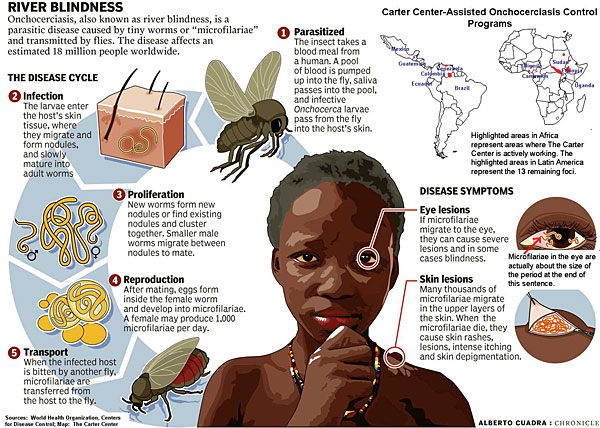
River blindness may be eradicated through long-term ivermectin use.


New studies, published Tuesday in the journal PLoS Neglected Tropical Diseases, suggest river blindness can be wiped out with a long enough course of ivermectin. The World Health Organization (WHO) said the studies demonstrated that treatment with the drug ivermectin stopped further infections and transmission of the disease in three areas of Africa in Mali and Senegal.

The drug ivermectin, developed in 1987 by Merck, kills the larvae of the parasite that causes the disease, but not the adult worms, so scientists thought treatments were needed every six months or year to keep it under control. Researchers found, however, that after 15 to 17 years of regular treatment, only a few infections remained after treatment was stopped in...three test areas, leading them to conclude that river blindness can be wiped out with a long enough course of ivermectin. AFP notes that main funding for the studies came from the Bill & Melinda Gates Foundation.

BBC News reports that currently, at least 37 million people are infected with the disease, which causes sufferers to lose their sight and also to develop painful skin complaints. River blindness is endemic in many parts of Africa, primarily in poor, rural communities. The disease is caused by a parasite that is transmitted to people through the bite of the black fly. The worms spread through the body and when they eventually die, our immune system reacts fiercely. That reaction destroys living tissue -- especially the eye. While doctors have known for years that drugs can control the disease, they now believe it can be eliminated.

Tuesday, July 21, 2009

Half a brain girl recovers vision

According to research published in the Proceedings of the National Academy of Sciences, researchers from the UK's University of Glasgow say they have solved the mystery of how a girl with half a brain has near perfect vision in one eye.

The 10-year-old girl was born missing the right side of her brain, whose job it is to map the left field of vision. Magnetic resonance imaging scans showed that the girl's brain rewired itself during development when she was still  in utero. In spite of having some seizures as a toddler, which were successfully treated, and slight weakness on her left side, the girl has had a normal medical history, attending school and taking part in regular activities. Amazingly, her left and right field vision is almost perfect in one eye.

Dr Lars Muckli, of the university's Centre for Cognitive Neuroimaging, said: "The brain has amazing plasticity but we were quite astonished to see just how well the single hemisphere of the brain in this girl has adapted to compensate for the missing half.

"Despite lacking one hemisphere, the girl has normal psychological function and is perfectly capable of living a normal and fulfilling life. She is witty, charming and intelligent."

Scans revealed that retinal nerve fibers carrying visual information from the back of the eye which should have gone to the right hemisphere of the brain diverted to the left.

Reblog this post [with Zemanta]

Intra-oral device helps blinded Marine to discern shapes.

Washington Post reports that a special 'lollipop,' a device that uses the tongue to stimulate the visual cortex and send sensory information to the brain, is helping Marine Cpl. Mike Jernigan, who lost both of his eyes in a roadside bomb attack in Iraq, to discern shapes.

The intra-oral device, or IOD...is an inch-square grid with 625 small round metal pieces that is connected by a wire to a small camera mounted on a pair of sunglasses and to a hand-held controller about the size of a BlackBerry. Images are sent by the camera to the IOD, which transmits a low-voltage pulse to Jernigan's tongue. With training, Jernigan has learned to translate that pulse into pictures.

Optometrist Amy Nau, OD, who is researching the effectiveness of the device at the University of Pittsburgh, explained, It's kind of like Braille that you use with your fingers. Dr. Nau added, Instead of symbols, it's a picture, and instead of your fingertips, it's your tongue. The IOD, called the BrainPort vision device...is manufactured by Wicab.

Reblog this post [with Zemanta]

Monday, July 20, 2009

Glaucoma biggest cause of blindness in New Zealand

Glaucoma NZ chairwoman Helen Danesh-Meyer has highlighted the biggest cause of blindness in New Zealand. It is estimated that 68,000 people have glaucoma in New Zealand. The Dominion Post has an excellent article highlighting this issue.


Reblog this post [with Zemanta]

Thursday, July 16, 2009

Glaucoma surgeries up while Medicare reimbursement down

According to a study published in the July issue of the Archives of Ophthalmology, the number of glaucoma surgeries is on the rise, but Medicare reimbursement for the procedures has been decreasing.

For the study, researchers from Exponent, Alcon Research, and the Bloomberg School of Public Health analyzed Part B Medicare data for 100,000 beneficiaries from 1997 to 2006. The team found that from 1997 to 2001, there was an overall decrease in both the number of procedures and the amount of annual payments, but there was an increase in the number of procedures in the following years, reaching a total of 414,980 in 2006. The investigators attributed the increase to advancements in technology and a change in calculating the global period for reimbursement purposes.

The authors also noted that payments for trabeculectomies decreased over time, while annual payments for newer procedures, such as cyclophotocoagulation and shunt-related procedures, have increased.

Reblog this post [with Zemanta]

A new paradigm for understanding glaucoma has emerged

Glaucoma isn't simply an eye disease, experts now say, but rather a degenerative nerve disorder, not unlike Alzheimer's or Parkinson's disease.

While researchers still recognize high pressure within the eye as a leading risk factor for glaucoma, it is becoming clear that the condition begins with injury to the optic nerve as it exits the back of the eye. The damage then spreads, moving from one nerve cell to adjoining nerve cells.

Neeru Gupta, MD, PhD, of the University of Toronto, explained, In glaucoma, we've shown that when your retinal ganglion cells are sick, the long axons that project from the eye into the brain are also affected, resulting in changes that we can detect in the vision center of the brain. This phenomenon, called transynaptic damage, occurs in Alzheimer's and Parkinson's disease, as well.

Reblog this post [with Zemanta]

Wednesday, July 15, 2009

About 200,000 new cases of advanced, age-related macular degeneration (AMD) are identified each year in the United States, many older Americans with more severe or "wet" forms of AMD endured inevitable, gradual loss of central vision.
Lucentis in clinical trials has been shown to stop and, in many cases, reverse at least some vision loss in most people with advanced AMD. Another drug closely related to Lucentis, known as Avastin (bevacizumab), also has been shown to be a highly effective and far cheaper alternative for lower-income individuals with advanced AMD.
The problem is that Avastin is FDA-approved only for treatment of colon and other cancers, but not for macular degeneration. As an alternative, many eye doctors have been using Avastin as an "off-label" treatment.
Pharmaceutical companies are driven by financial intersts, while physicians with patient care. Here is an excellent article that summarizes it.

Reblog this post [with Zemanta]

Tuesday, July 14, 2009

Does your employer care about your vision


Charlotte, NC has seen many things change over the course of the last years financial crisis. Both financial institutions Bank of America and Wachovia (now, Wells Fargo) have seen major shifts in how they do business.

From my perspective as an optometrist, the most notable has been the change in vision insurance plans especially for BofA. They moved from VSP considered a better partner to private practice optometrist to Eyemed (who also run the chain Lenscrafters).

The question that's raised is: how much shall companies bear for the employees eye care?.

It surely is no secret that if your vision is impaired, it affects practically every sphere of your life. Yet, we find that one place most organizations cut back is in vision and related service. It enrages me to see some plans that restrict eye exams to 24 months! Especially when they are kids! I spend considerable amount of time explaining to parents the need for annual eye exams.
Recently, a study of the eye care policies of the UK's top 250 companies revealed considerable confusion among employers over their responsibilities for the eye care of their employees. The results also showed that 59 per cent of the UK's leading 250 companies believe that they are only required to make a contribution towards the cost of glasses, while a further 20 per cent believed contributions are entirely voluntary.

I hope there is an independent study of the top 250 companies in the US, where the Human Resource officers are surveyed about their responsibilities to employees vision.

Reblog this post [with Zemanta]

Tuesday, July 07, 2009

Laser treatment may help reverse effects of dry AMD


A ground-breaking laser treatment may help reverse the effects of age-related macular degeneration (AMD). In early proof-of-concept trials involving about 50 people, the laser technique, which was developed by pioneering eye expert Professor John Marshall of King's College London, appeared to return the back of the eye to its youthful state.

In the technique, a painless 'short pulse' laser boosts the release of the enzymes to clean away natural waste materials, but without damaging the cells that enable vision. The researchers now plan further studies in patients already suffering from AMD in one eye with the aim of saving the sight in their better eye for as long as possible.

Professor Marshall said that he hoped the treatment would be available within two to five years. There is currently no treatment for the most common form of AMD -- known as 'dry' AMD -- which the new laser technique could prevent.

Reblog this post [with Zemanta]

Monday, July 06, 2009

Recent estimates by the World Health Organization (WHO) calculate at least 171 million people worldwide suffer from diabetes and expect this figure to more than double, to reach 366 million, by 2030

According to Sanofi-Aventis SA, its long-acting Lantus [insulin glargine] drug didn't increase the risk of blindness for diabetics compared to an older type of insulin in a five-year study of more than 1,000 patients. In addition, there was...no 'observable trend' showing a difference in the risk of serious side effects including cancer, the drugmaker said in a statement.

"This 5-year study is the longest randomized controlled study with insulin glargine versus NPH human insulin," said lead investigator Julio Rosenstock, MD, Director of the Dallas Diabetes and Endocrine Center at Medical City and also Clinical Professor of Medicine, University of Texas Southwestern Medical Schoo.

The study results were published in the online edition of the Diabetologia medical journal.
Reblog this post [with Zemanta]

Lucentis met late-stage trial goal in patients with macular edema due to BRVO

The same view with age-related macular degener...Image via Wikipedia

Genentech, Inc. announced that its macular degeneration drug Lucentis [ranibizumab] met its goal in a late stage trial, improving the vision of patients with macular edema due to branch retinal vein occlusion.

Currently, Lucentis is approved to treat neurovascular, or 'wet,' age-related macular degeneration. Genentech is now trying to get the drug approved for macular edema due to branch retinal vein occlusion, a condition in which the macula, or central part of the retina, swells because fluid leaks or builds up.
Reblog this post [with Zemanta]

Tuesday, June 30, 2009

Light-sensing worms provide a new tool for the study of vision

A team from the University in Michigan, led by Shawn Xu, has discovered that tiny worms can sense light.

They discovered that the chemical reactions used by the C. elegans ( a 1mm sized worm which is one of the most commonly used model animals in genetic research) are rather similar to the ones in humans. This discovery means that from now on the worm can be used for the research of building blocks of human vision, as well as how disrupting the phototransduction pathway can lead to eye disease.

This discovery may lead to further breakthroughs in the research of vision, helping researchers understand the basis of human vision diseases and promote the understanding of the evolutionary development of eyes in various species.

Reblog this post [with Zemanta]

Experiment seeks to head off Type 1 diabetes

Researchers at Children's Hospital of Pittsburgh are hoping to control type 1 diabetes by curbing the rogue immune cells that cause it, before patients become completely dependent on daily insulin injections tosurvive.

About 3 million Americans have Type 1 diabetes, where the body mistakenly attacks and destroys cells in the pancreas that produce insulin, the hormone crucial to converting blood sugar to energy.

This novel vaccine -- made from patients' own blood blocks the '911 call' that dendritic cells send to direct T cells to the pancreas. Just altering three communication molecules on their surface basically confuses and paralyzes the T cells. In mice and monkeys, the reprogrammed cells ended the vicious cycle of a pancreas attack that in turn attracts more T cells to attack again.

In human trials, the team has used donated blood to filter out immature dendritic cells and then reprogram them. Animal experiments have shown that after the cells have been re-injected just inside the skin over the pancreas...the cells somehow find their way back to that organ to start working.

Two competing teams - MacroGenics Inc. and Eli Lilly, and Tolerx Inc. and GlaxoSmithKline - have advanced tests under way

Currently, 15 adult diabetics [are] being injected to make sure there are no unexpected side effects before researchers test if reprogrammed cells might really protect children's pancreas cells

Reblog this post [with Zemanta]

Monday, June 29, 2009

UAW retirees swamping optometry offices in Indiana

A phoropter in use.Image via Wikipedia

The Indianapolis Star reported that, in Indiana, optometry offices have been swamped with United Auto Workers retirees who want to squeeze in one last visit before the coverage evaporates.
According to Bill Matthews, of UAW Local 23, Indiana is home to about 100,000 hourly UAW retirees & all of them have been affected by the change.
The Star described the plight of one retiree who has diabetes and needs regular eye examinations. David Ehman had his eyes checked in the past year, so he cannot make one more covered visit to his optometrist. The last visit he and his wife made to the eye doctor, with coverage, she left with new eyeglasses and he with a fresh set of contact lenses for a combined bill of nearly $800. Now, he said, he will have to shop around. Ehman stated, “The insurance thing really puts a bind on you. You start having to decide, how much is your health worth? “

Reblog this post [with Zemanta]

Tuesday, June 23, 2009

ವೀಡಿಯೊ ಗೇಮ್ ಟು ಟ್ರೀಟ್ ಲಜ್ಯ್ ಎಯೇ

This image shows many of the characteristics c...Image via Wikipedia

Amblyopia, otherwise known as lazy eye, is a disorder of the visual system that is characterized by poor or indistinct vision in an eye that is otherwise physically normal, or out of proportion to associated structural abnormalities. It has been estimated to affect 1–5% of the population.

Treatment consists of correcting the optical deficit and forcing use of the amblyopic eye, either by patching the good eye, or by instilling topical atropine in the eye with better vision. This, according to the researchers, can lead to social stigma during a formative part of childhood
A review was published recently in Vision Research of a new computer based therapy developed by researchers from Tel Aviv University.

Dr. Uri Polat, Tel Aviv University's eye and brain specialist has developed a computer therapy that could spare kids from the ugly eye patch, letting them enjoy themselves during therapy.
And, this treatment, currently available only for adults, corrects the activity of the neurons in the brain, the main operator of eye function. The study showed that twenty hours in front of Dr. Polat's computer treatment had the same effect as about 500 hours of wearing an eye patch. In this treatment methodology, special and random objects appear, keeping the patient constantly alert and expecting the unexpected.

Researchers from Tel Aviv University have now collaborated with gaming specialists from Rochester University for developing a version of the therapy for kids.
"You see these poor kids in kindergarten wearing the patch. Everyone hates it, especially the parents who know what it's doing to their kid's self-esteem," said Dr. Polat. "As far as I know this is really a one-of-a-kind, non-invasive and effective way to treat lazy eye, without the use of an embarrassing eye patch.
"This is probably the first treatment that attempts to correct lazy eyes in adults, something that doctors had previously given up on. Doctors don't suggest intervention after the age of nine, because it usually doesn't work," he Polat added.


Reblog this post [with Zemanta]

Monday, June 22, 2009

Human organ and tissue transplantation has become an important and growing part of modern medical practice. Advances in medical technology have resulted in millions of Americans receiving these life-saving or life-enhancing gifts. Eye banks can provide the most precious gifts of the world that is the gift of vision.

N.C. Eye Bank has the distinction of being the provider of most corneas in the world. Eye Bank Association of America reports that the NC based organization provided corneas for 3,440 transplants in 2008; the most of any eye bank in the world.

Eye banks make these transplants possible by processing donated corneas and supplying them to surgeons. According to Bob Russ, the eye bank's director of human resources, the expansion of opportunities to sign up for organ donation is one of the reasons why more people have agreed to be donors.
When a potential donor dies, the eye bank's clock starts ticking.
According to a recent report from Donate Life America people can sign up to be donors through the N.C. Division of Motor Vehicles when getting or renewing their driver's license.
Under the new State Law that passed last year the heart symbol on someone's driver's license is considered binding consent to donate organs, including eye tissue. Before the law was passed, such groups as the eye bank had to get permission from the family to get eye tissue.

How to donate?
• In North Carolina, people can sign up to be organ donors through the N.C. Division of Motor Vehicles. The licenses of those who are donors are marked with a heart.
• Donors should tell their family members about their wishes.
• Corneas to be used in a transplant, must be stored within 24 hours of the donor's death.
• In eye-tissue donations, disease, injury or infection in eyes disqualifies them for transplantation, but they can still be used for education and research purposes.
For more information about eye donation, you may call or visit the N.C.Eye Bank at 765-0932 or go to www.nceyebank.org

Relationship between omega-3 fatty acids, risk of AMD

According to a study published online June 9 in the British Journal of Ophthalmology, the association between omega-3 fatty acids and lower risk of age-related macular degeneration (AMD) appears to be modified by other dietary supplements and disease stage.
For the study, researchers from Tufts University performed an analysis of data from 2,924 patients participating in the Age-Related Eye Disease Study, an eight-year supplementation trial. Dietary intake was assessed using food-frequency questionnaires.
The investigators found that a high intake of the omega-3s docosahexaenoic acid (DHA) and eicosapentaenoic acid...was associated with a lower risk of progression to advanced AMD. The team also found that patients who had low glycemic index diets and high consumption of the omega-3 fatty acids had lower risks of progression to advanced AMD than patients with high intakes alone, but patients in the early stages of AMD...only derived a benefit from consuming large amounts of DHA if they were not taking additional supplementation as part of the study.

Optometric vision therapy described as life-transforming

In an opinion piece in the Los Angeles Times Susan R. Barry, professor of neurobiology in the department of biological sciences at Mount Holyoke College and the author of Fixing My Gaze: A Scientist's Journey Into Seeing in Three Dimensions, writes, Children are still not routinely tested for binocular vision deficits because the standard school vision exam (reading the eye chart with one eye at a time) doesn't screen for defects in eye coordination or stereovision. As a result, many children with vision problems may be labeled learning disabled, or if they misbehave in frustration, diagnosed with attention-deficit hyperactivity disorder.
At age 48, Barry, who suffered from crossed eyes and stereoblindness since childhood, consulted a developmental optometrist who prescribed a program of optometric vision therapy, which taught her how to coordinate her eyes so she could see things in three dimensions. Wishing she had had this therapy as a youngster, she concludes, Detecting these problems early and then seeking proper treatment can improve a child's vision and transform a child's life

Twitter Delicious Facebook Digg Stumbleupon Favorites More

 
Design by Free WordPress Themes | Bloggerized by Lasantha - Premium Blogger Themes | Bluehost Review